
Security teams used to organize their programs around categories. Application security belonged to one team. Cloud security belonged to another. Runtime protection often lived somewhere else entirely.
That separation made sense when software environments were less connected than they are today. Modern systems do not respect those boundaries.
A vulnerable dependency may start as a software issue, become a cloud exposure problem, and eventually turn into a runtime incident. A misconfigured cloud service can expose an application. A runtime alert may trace back to a weakness introduced months earlier during development.
The attack path rarely stays within a single category. Unfortunately, many security tools still do. This is one reason security leaders are increasingly looking for platforms capable of connecting code, cloud, and runtime visibility. The objective is not simply to find risks. It is to understand how risks move through an environment and where remediation efforts should begin.
Many organizations exploring Snyk alternatives eventually find themselves asking this broader question. They are no longer evaluating code scanning alone. They are looking for visibility across the entire attack surface.
The platforms below are among the most commonly evaluated solutions in this category.
The Problem Isn’t Visibility Anymore
A decade ago, security teams struggled because they lacked information. Today, they often struggle because they have too much of it.
Code scanners generate findings. Cloud security platforms generate findings. Runtime systems generate findings. Vulnerability scanners generate findings. Every tool contributes another stream of alerts. The difficult part is understanding how those alerts relate to one another.
A cloud exposure may make a code vulnerability more dangerous. A runtime event may reveal which cloud risks deserve immediate attention. A dependency issue may become significantly more important once exploitation activity is detected. Without context, prioritization becomes difficult.
The strongest platforms attempt to solve that problem by connecting data across multiple security domains.
What To Look For in a Unified Security Platform
Coverage matters. Context matters even more. Organizations evaluating platforms in this category typically look for:
- Application security testing
- Cloud security visibility
- Runtime monitoring
- Vulnerability management
- Risk prioritization
- Asset visibility
- Remediation workflows
- Security posture management
The goal is not necessarily to replace every security product. The goal is to create a clearer understanding of risk across the environment.
1. Aikido
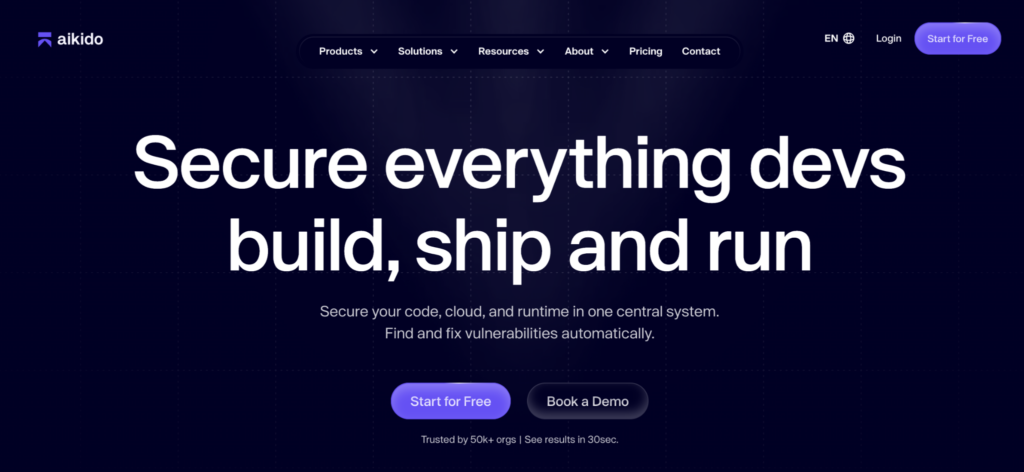
Many security platforms start with a specific category and expand over time. Aikido takes a broader view from the outset.
The platform combines application security, cloud security, runtime protection, vulnerability management, AI-powered pentesting, supply chain security, malware detection, secrets scanning, infrastructure security, and remediation workflows within a unified environment. Rather than treating code, cloud, and runtime as separate security disciplines, the platform connects findings across them to help teams understand real-world risk.
This approach is particularly appealing for organizations trying to reduce the number of dashboards involved in security operations.
Capabilities include:
- SAST
- SCA
- Cloud security
- Runtime protection
- Secrets scanning
- Container security
- AI pentesting
- Vulnerability management
- Supply chain security
- AutoFix remediation
For organizations looking for broad coverage across the software lifecycle, Aikido is frequently one of the first platforms evaluated.
2. Wiz
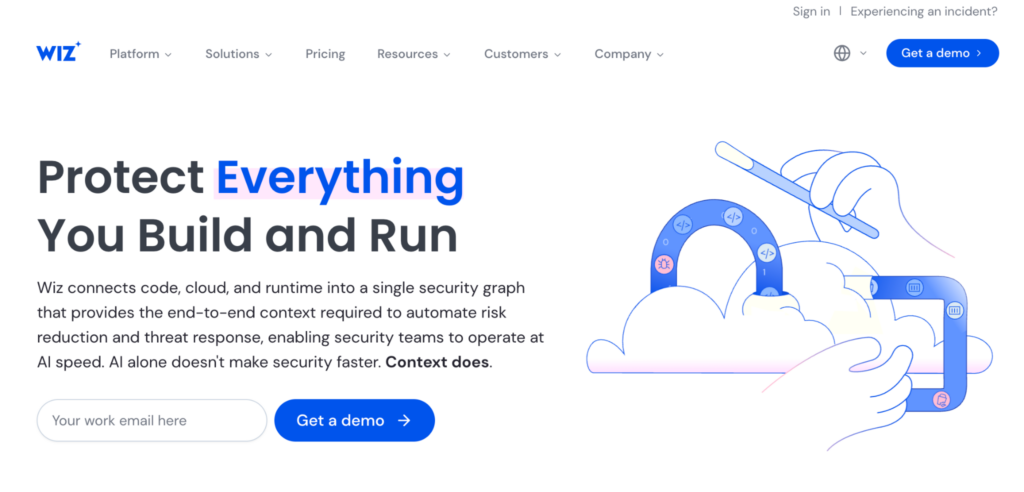
Cloud environments have become one of the largest sources of security complexity. Many organizations discover that understanding cloud risk requires visibility into infrastructure, identities, workloads, containers, and applications simultaneously.
Wiz built its reputation around creating that visibility. The platform helps organizations understand how different cloud risks connect to one another and where exposures create meaningful attack paths.
Capabilities commonly include:
- CSPM
- Cloud workload protection
- Container security
- Identity security
- Exposure management
- Vulnerability visibility
For cloud-first organizations, Wiz remains one of the most widely evaluated platforms.
3. Orca Security
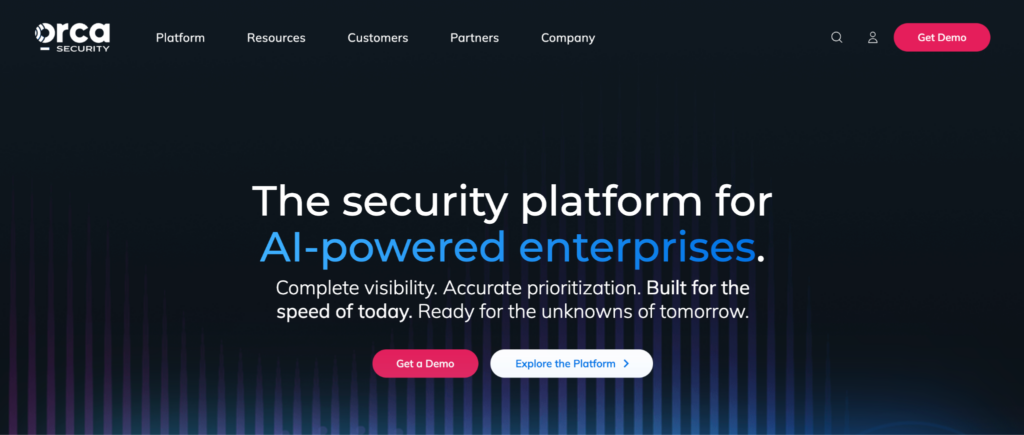
Some security platforms depend heavily on agents. Others focus on visibility without requiring extensive deployment changes.
Orca Security became well known for its agentless approach to cloud security and exposure management. The platform provides broad visibility across cloud assets while helping organizations identify attack paths and prioritize remediation.
Capabilities include:
- CSPM
- Cloud workload protection
- Vulnerability management
- Asset visibility
- Exposure analysis
- Security posture management
Organizations looking for cloud-focused visibility often compare Orca Security alongside Wiz and similar platforms.
4. Prisma Cloud
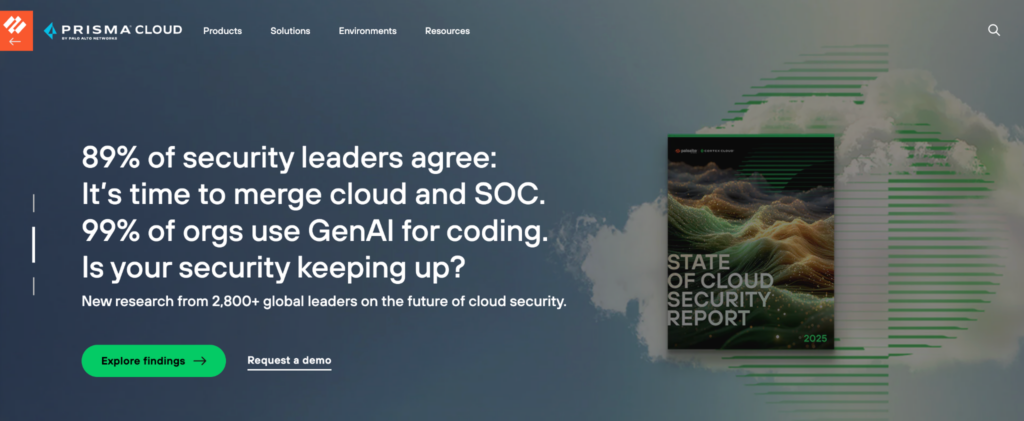
Many organizations prefer security platforms that cover a wide range of cloud-native environments from a single vendor. Prisma Cloud has built much of its reputation around that concept.
The platform combines cloud security posture management, workload protection, container security, identity visibility, and risk management capabilities designed for complex cloud environments.
Capabilities include:
- CSPM
- Cloud workload security
- Container security
- Identity security
- IaC security
- Risk management
For enterprises operating large cloud environments, Prisma Cloud remains a major player.
5. Aqua Security
Containers changed how applications are built. They also introduced entirely new security challenges.
Aqua Security has spent years focusing on containerized environments, cloud-native workloads, and runtime protection. The platform is frequently evaluated by organizations seeking deeper visibility into container security and workload protection.
Capabilities include:
- Container security
- Cloud workload protection
- Runtime security
- Kubernetes security
- Vulnerability management
- Supply chain security
Organizations heavily invested in cloud-native infrastructure often include Aqua Security in evaluations.
6. Lacework
Security teams often struggle to understand which alerts deserve immediate attention. Behavioral analysis has become one way of addressing that challenge.
Lacework uses behavioral context to help organizations identify unusual activity, suspicious patterns, and potential threats across cloud environments. The platform focuses heavily on understanding relationships between assets, users, workloads, and events.
Capabilities include:
- Cloud security
- Threat detection
- Behavioral analytics
- Vulnerability management
- Compliance monitoring
- Security posture visibility
For organizations seeking stronger runtime and behavioral visibility, Lacework remains a recognizable option.
7. Microsoft Defender for Cloud
Many organizations already operate within Microsoft’s ecosystem. That reality influences security platform decisions.
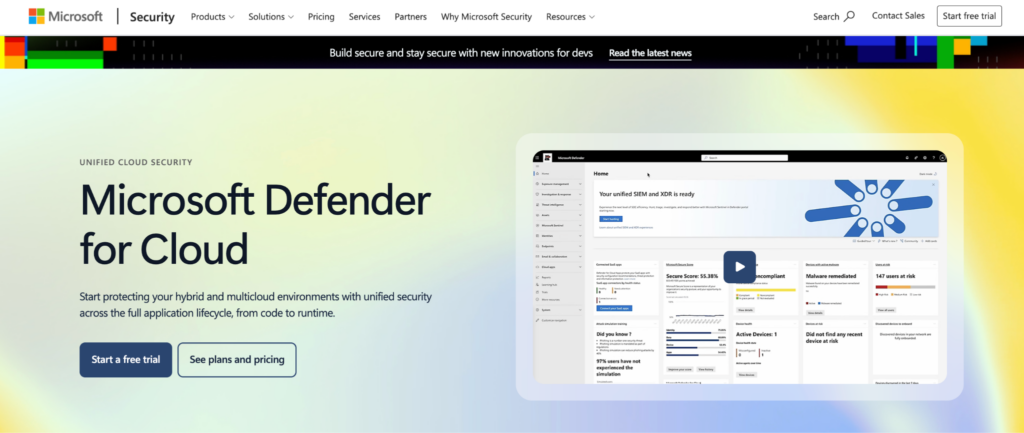
Microsoft Defender for Cloud combines multiple security capabilities across applications, infrastructure, workloads, and cloud environments. For organizations already using Microsoft services extensively, the platform often provides broad security coverage without requiring additional vendors.
Capabilities include:
- Cloud security posture management
- Workload protection
- Vulnerability assessment
- Container security
- Threat detection
- Compliance reporting
For Microsoft-centric environments, consolidation can become a significant advantage.
Security Teams Are Starting To Think in Attack Paths
For years, security programs focused heavily on findings. Modern security programs increasingly focus on relationships. A vulnerability becomes more important when it affects an exposed asset. A cloud misconfiguration becomes more important when it creates a path toward sensitive resources. A runtime alert becomes more important when it confirms active exploitation.
Understanding these connections often provides more value than simply identifying additional vulnerabilities. This shift is influencing how organizations evaluate security platforms.
Why Separate Security Categories Are Starting To Blur
Application security. Cloud security. Runtime protection. These labels remain useful. The reality underneath them is becoming increasingly interconnected.
Applications run in cloud environments. Cloud infrastructure supports application workloads. Runtime activity reveals how risks behave after deployment. Each layer influences the others.
Security platforms are evolving in response. Organizations increasingly prefer solutions capable of connecting these layers rather than analyzing them independently.
Choosing the Right Platform
The best platform depends on where visibility gaps currently exist. Organizations heavily focused on cloud security may prioritize different capabilities than teams seeking stronger application security coverage.
Some businesses want runtime detection. Others care more about vulnerability prioritization, posture management, or workload protection.
For teams evaluating Snyk alternatives, the conversation often expands far beyond code scanning. The real challenge is understanding risk across applications, infrastructure, and runtime environments simultaneously.
Platforms such as Aikido, Wiz, Orca Security, Prisma Cloud, Aqua Security, Lacework, and Microsoft Defender for Cloud each approach the challenge differently. What they share is a recognition that modern security problems rarely stay confined to a single category for very long.