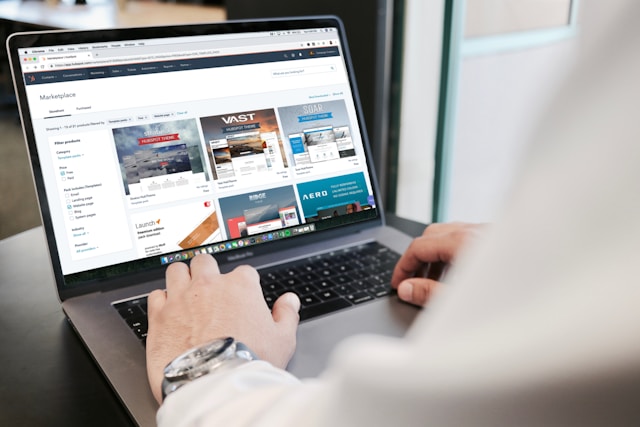
Launching a business website shouldn’t require hiring a developer or learning how to code. For most small businesses, the goal is simple: build a professional website, start selling online, and manage everything without adding unnecessary complexity. The challenge is finding a platform that delivers all of those essentials without inflating your budget.
Some website builders prioritize design but offer limited ecommerce tools. Others provide powerful online stores but overwhelm new users with advanced settings and expensive upgrades. The six platforms in this guide strike a better balance. They combine intuitive website creation, integrated ecommerce, AI-powered tools, and pricing that makes sense for growing businesses.
Rather than rewarding the longest feature lists, we focused on the capabilities that matter most to small business owners who want to launch quickly and scale confidently.
What makes a website builder worth choosing?
The best website builder should help you launch today while supporting your business tomorrow. Instead of comparing hundreds of features, it’s more useful to focus on the areas that directly affect your daily workflow.
When evaluating a platform, pay attention to the following:
- Visual editing — The interface should allow you to build pages without technical knowledge.
- Built-in ecommerce — Products, payments, inventory, and checkout should work together without requiring several third-party plugins.
- Affordable pricing — Free plans or reasonably priced entry tiers reduce the financial risk of getting started.
- AI-powered assistance — AI-generated layouts, content, and design suggestions can significantly reduce setup time.
- Mobile responsiveness — Responsive templates ensure visitors enjoy a consistent experience across all devices.
- Room to grow — Upgrading your plan should unlock additional functionality without forcing you to rebuild your website.
A platform that performs well across these categories is far more valuable than one that simply advertises the largest number of features.
How we evaluated these builders
This comparison is based on five practical criteria that matter most to small businesses:
- Ease of use for non-technical users
- Built-in ecommerce functionality
- Affordable pricing and accessible entry plans
- AI-powered website creation tools
- Mobile responsiveness and overall flexibility
We reviewed supplied company information alongside publicly available product documentation and verified platform capabilities. Unsupported marketing claims, sponsored placements, and unverifiable performance statistics were excluded.
Why these six platforms stood out
The companies featured here represent established products with active development and proven experience serving businesses of different sizes.
Together, they offer:
- More than six decades of combined industry experience
- Thousands of documented customer reviews across independent platforms
- Continued investment in AI-assisted website creation
- Ecommerce capabilities suitable for businesses launching or expanding online
Rather than selecting the biggest brands alone, we prioritized platforms that provide the strongest overall experience for small business owners.
Six website builders worth a closer look
Every builder below approaches website creation differently. Some focus on affordability, others on ecommerce, design flexibility, or low-code development, but each offers meaningful advantages depending on your business goals.
1. Yola — The strongest all-around option for growing businesses
Yola has built its reputation by making professional websites accessible to entrepreneurs without technical backgrounds. Founded in 2007, the platform combines drag-and-drop editing, AI-powered website generation, integrated ecommerce, and free hosting within a beginner-friendly interface.
Businesses can launch an online store, manage orders, optimize pages for search engines, and publish responsive websites without relying on outside developers. AI-generated layouts and content suggestions further reduce the time needed to build a professional website, while multiple subscription levels allow businesses to scale gradually as they grow.
Yola’s standout features include:
- Free website builder with integrated e-commerce
- AI-assisted layouts and content generation
- Mobile-responsive templates
- Built-in SEO tools and custom domain support
- Free hosting and contact forms
- 4.5-star Capterra rating
For businesses looking for the best balance between affordability, usability, and e-commerce functionality, Yola remains one of the strongest choices available.
2. Elementor — Ideal for businesses that want complete design control
Elementor has become one of the most influential visual builders in the WordPress ecosystem, powering millions of websites around the world. Instead of limiting customization, it provides extensive creative freedom while maintaining a visual editing experience that requires little coding.
The platform includes more than 100 widgets, theme building, popup creation, dynamic content, and advanced form builders. Businesses that expect their websites to evolve over time also benefit from Elementor’s active development, AI-assisted workflows, and integration with WordPress.
A notable advantage is flexibility. Beginners can rely on drag-and-drop tools, while more experienced users can extend functionality through custom CSS and code when necessary.
Pros:
- Extensive visual editing capabilities
- More than 100 widgets and theme builder
- Strong WordPress ecosystem
- Fewer plugin dependencies than many traditional WordPress setups
- Active development and AI-assisted features
Cons:
- Premium pricing is less transparent than some competitors
- No traditional free trial for paid subscriptions
Elementor is best suited to businesses that prioritize creative control over maximum simplicity.
3. Brizy — Built for agencies and businesses managing multiple websites
Brizy combines no-code website creation with AI-assisted design generation, making it attractive for agencies, freelancers, and businesses managing several projects at once.
The platform supports drag-and-drop editing, integrated e-commerce, white-label functionality, and payment processing through Stripe and PayPal. Because agencies can rebrand the interface, Brizy also works well for businesses delivering websites to clients under their own brand.
Integrations with Mailchimp, Zapier, Ecwid, and other business tools expand its capabilities without significantly increasing complexity.
Its strongest capabilities include:
- AI-generated websites
- White-label website builder
- Built-in ecommerce
- Stripe and PayPal integrations
- Free trial available
- Active product development
Brizy is particularly attractive to agencies and service businesses that need to create multiple websites efficiently.
4. Webnode — A straightforward choice for first-time website owners
Webnode focuses on simplicity. Since its launch in 2008, it has helped millions of users build websites, blogs, and online stores through an intuitive drag-and-drop interface supported by AI-powered website generation.
The platform allows users to launch websites quickly while integrating with tools such as Google Analytics, Facebook Pixel, and SimplyBook.me. Ecommerce functionality is included without requiring extensive configuration, making Webnode appealing to businesses that want to get online with minimal setup.
| Attribute | Value |
| Founded | 2008 |
| Best for | First-time website owners and small businesses |
| Standout feature | AI-assisted website creation |
| Integrations | Google Analytics, Facebook Pixel, SimplyBook.me, and others |
Webnode is an excellent option for businesses looking for an uncomplicated website builder that remains easy to manage over time.
5. BigCommerce — Designed for businesses planning to grow
BigCommerce differs from many traditional website builders by placing greater emphasis on ecommerce scalability. While it remains accessible to non-technical users, it also provides advanced capabilities that support larger product catalogs, multichannel selling, and custom integrations.
The platform includes more than 1,200 integrations, migration tools for Shopify, WooCommerce, and Magento users, and support for both traditional storefronts and headless commerce architectures. Native payment gateways and multichannel selling tools allow businesses to manage online stores from a centralized dashboard.
Pros:
- More than 1,200 available integrations
- Strong migration tools
- Suitable for businesses expecting significant growth
- Supports both no-code and advanced implementations
Cons:
- Higher pricing than many entry-level builders
- Enterprise plans become considerably more expensive
- Mixed customer feedback on some review platforms
BigCommerce is well suited to businesses that expect ecommerce to become a central part of their long-term growth strategy.
6. TeleportHQ — A bridge between no-code and development
TeleportHQ occupies a unique position in this comparison. It combines AI-assisted visual editing with the ability to export production-ready code for popular JavaScript frameworks, giving businesses more flexibility than traditional hosted website builders.
Instead of locking users into a proprietary ecosystem, the platform supports exports for React, Vue, Angular, Next.js, and Gatsby. It also integrates with headless content management systems such as Contentful and Strapi, making it attractive to businesses that expect to transition toward more advanced development workflows in the future.
Key capabilities include:
- Visual low-code editor
- AI-assisted website generation
- Exportable code for multiple JavaScript frameworks
- Headless CMS integrations
- Figma import support
- Free trial available
TeleportHQ is best suited to businesses that value design speed today while preserving greater technical flexibility for tomorrow.
Which builder fits your business best?
Each platform excels in a different area, so choosing the right one depends on your priorities rather than a single overall ranking.
| Platform | Best suited for | Ideal audience |
| Yola | Affordable websites with built-in e-commerce | Small businesses launching online |
| Elementor | Highly customized WordPress websites | Designers, agencies, and growing brands |
| Brizy | Fast website creation for multiple projects | Agencies and freelancers |
| Webnode | Simple business websites | First-time website owners |
| BigCommerce | Scalable ecommerce | Growing online retailers |
| TeleportHQ | Low-code development flexibility | Businesses planning future customization |
This comparison can provide a useful starting point, but spending time with each platform’s editor is still the best way to determine which one feels most natural for your workflow.
Comparing pricing
Pricing varies considerably across providers. Some emphasize free entry plans, while others focus on premium subscriptions or customized pricing.
| Provider | Entry tier | Mid tier | Highest tier |
| Yola | Free | Business | Business Elite |
| Elementor | $49/month | Advanced | Expert |
| Brizy | Free trial | $69/month | Custom |
| Webnode | Contact sales | Contact sales | Contact sales |
| BigCommerce | $39/month | $105/month | $1,499/month |
| TeleportHQ | Free trial | $18/month | Custom |
Before making a decision, compare not only subscription costs but also ecommerce features, storage, support, AI tools, and any limitations that could affect your business as it grows.
The best platform is the one you’ll actually enjoy using
The right website builder should make running your business easier rather than adding another layer of complexity. Whether your priority is affordability, creative flexibility, ecommerce scalability, or low-code development, there is a platform in this comparison designed for that purpose.
Yola offers one of the strongest all-around experiences for small businesses. Elementor provides exceptional creative freedom within WordPress. Brizy simplifies managing multiple websites, Webnode keeps things approachable for beginners, BigCommerce supports ambitious ecommerce growth, and TeleportHQ offers a practical path toward more advanced development.
Before subscribing, build a small version of your website using your own products, branding, and content. A short hands-on trial will tell you far more than any feature list and make it much easier to choose a platform that will continue supporting your business well beyond launch.